Digital Control, Analog Soul
-
 $59.00
 -
-
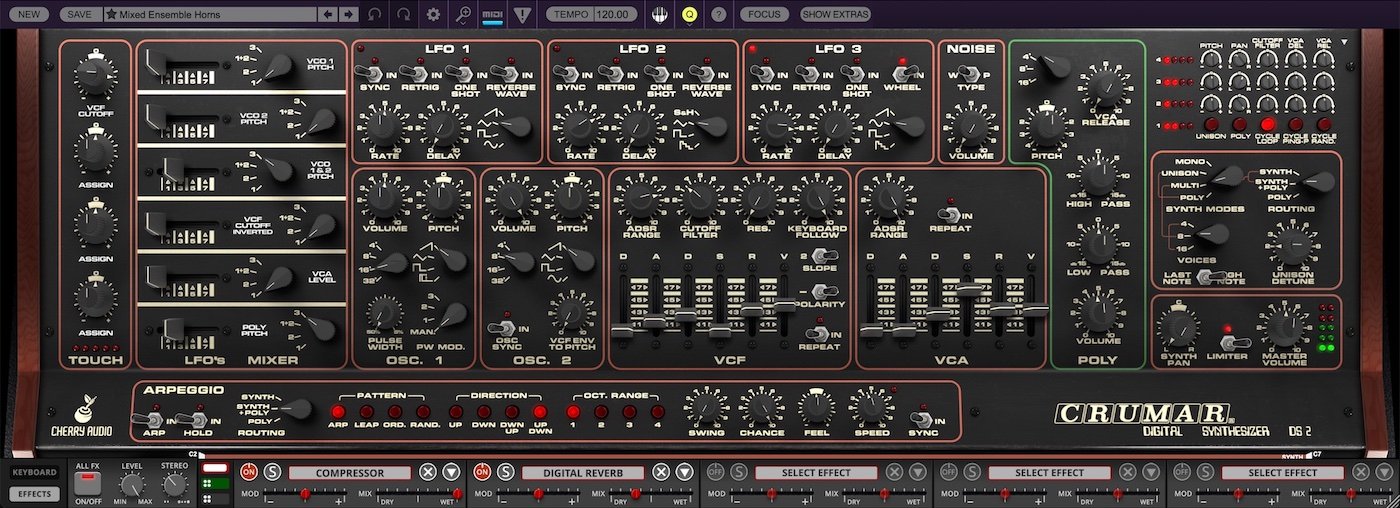
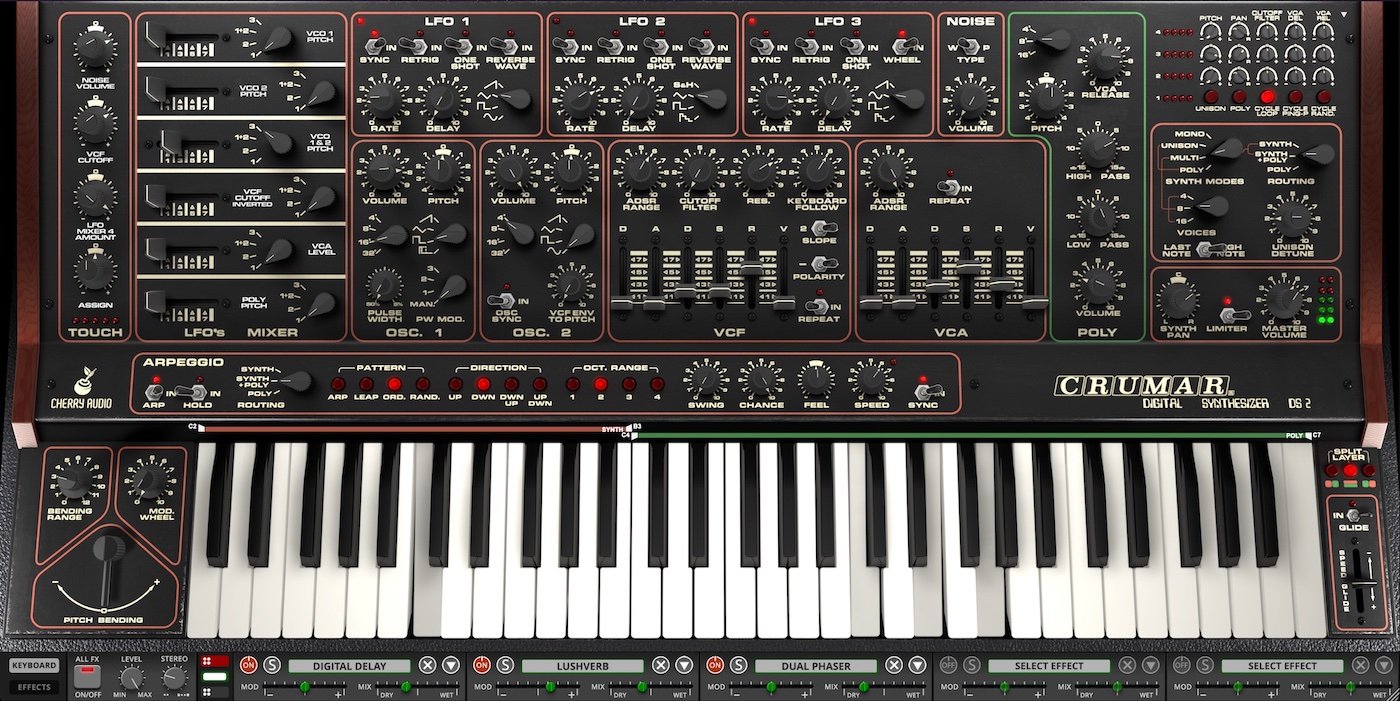
Cherry Audio's Crumar DS-2 synthesizer faithfully replicates the unique digital/analog sound of the ahead-of-its-time hardware synth from 1978. This latest collaboration with our friends at Crumar Instruments not only captures the distinctive tone and multitimbral capabilities of the original but also enhances them, offering an impressive combination of innovation and authenticity.
Synth Anatomy says: "It’s commendable and very welcome that Cherry Audio also creates emulations of synths that are weirder, odd and less famous... another great-sounding, characterful synthesizer that reflects both the original features and the sound design workflow, plus major refinements over the original Italian hardware from 1978."
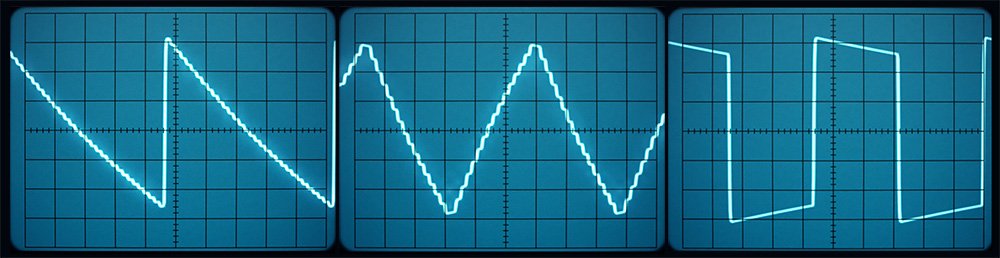
The original Crumar DS-2 featured a monophonic synth engine paired with a 44-note fully polyphonic (paraphonic) companion section, creating a unique musical experience when utilized together. "DS" stood for "Digital Synthesizer," and it was indeed an early hybrid synth with two Digitally-Controlled Oscillators (DCOs), and analog LFOs, VCFs, VCA, and EGs. But these weren't the same kind of DCOs we would become familiar with in later polyphonic synthesizers. To avoid the tuning problems of traditional analog synthesizers, Crumar employed a cutting-edge concept in the Synth section to create oscillators that wouldn’t drift. The resulting waveforms, however, were completely stair-stepped, producing a gritty tone and wild harmonics.
The Poly section was paraphonic, with a single filter (with highpass and lowpass knobs) and its own VCA. It generated unique 'sawtooth' waveforms by combining divide-down square waves with resistors and high-pass filtering. The cutoff, resonance, and modulation settings of the Synth section also applied to the paraphonic poly filter.
As a result, the timbres produced by the DS-2 are distinct from both the smooth, polished sounds of most digital synthesizers and the warm, buttery tones associated with classic analog designs. Instead, the DS-2 has a jagged, harmonically edgy quality and a gritty character that sets it apart.
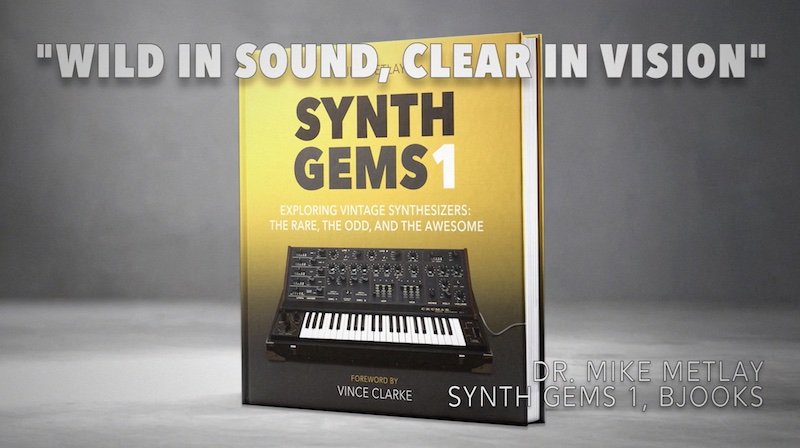
Artists who used the Crumar DS-2 included a diverse array of performers, such as Cirrus, The Cardigans, Alan St. Jon (from the Billy Squier band), Tambourine Studio, Ernesto Ghezzi, Dr. Bill Rhodes, Giancarlo Toniutti, Ian Hunter/Mick Ronson, Hainbach, Legowelt, Mahjongg, Jexus, and Sun Ra.
DS-2 is a true example of "vintage digital" technology, and it's been an exciting journey to revive it in software in collaboration with Crumar Instruments. We've significantly upgraded the DS-2 with a range of innovative features that firmly bring it into the 21st century. The monophonic Synth section has been expanded to include last/high settings, as well as Unison and Multi voice options, offering voice cycling, panning, and tuning capabilities. It also boasts its own polyphonic functionality with 4-, 8-, or 16-voice options. Meanwhile, the Poly section supports full polyphony, accommodating up to 32 notes.
For added versatility, DS-2 features a keyboard split mode in addition to the layered mode, allowing users to assign adjustable ranges for both splits and layers across the Synth and Poly tone generators. OSC 2 in the Synth section now includes a stair-stepped sine waveform option, and oscillator sync has been added for enhanced sound design possibilities.
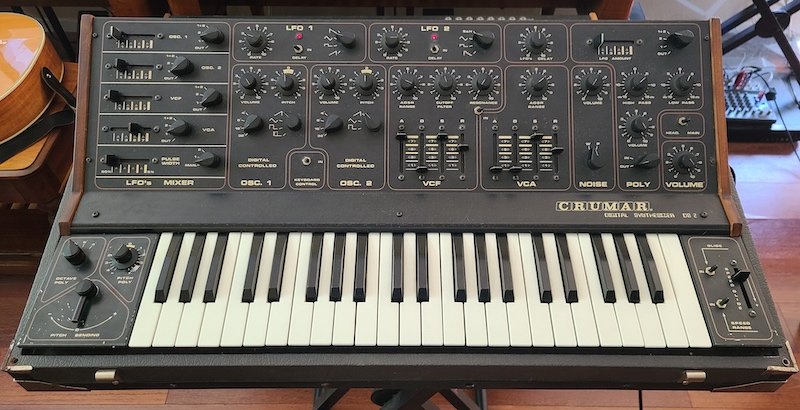
A third LFO has been introduced, offering ramp, sine, square, and staircase waveforms. Each LFO now includes discrete delay knobs, replacing the previous global delay knob, and features sync, retrigger, and one-shot capabilities. Reverse wave options are also available for LFOs 1 and 2. The LFO Mixer, which was previously hardwired to specific destinations, now offers six assignable destinations with 33 options each, providing unparalleled modulation flexibility.
The envelopes have been enhanced with an initial delay stage and velocity sensitivity, and now include looping functionality. Additionally, the Poly section now features VCA release control, making it better suited to powerful string-synth sonics. Touch control has been added with four slots and simple click-to-assign functionality, supporting both channel and polyphonic aftertouch with compatible MIDI controllers.
The VCF has been upgraded to include both 12dB 2-pole and the original 24dB 4-pole options, along with polarity and key follow adjustments. Other enhancements include an assignable bend range, a mod wheel, and a dynamic arpeggiator that can be applied to either or both sections.
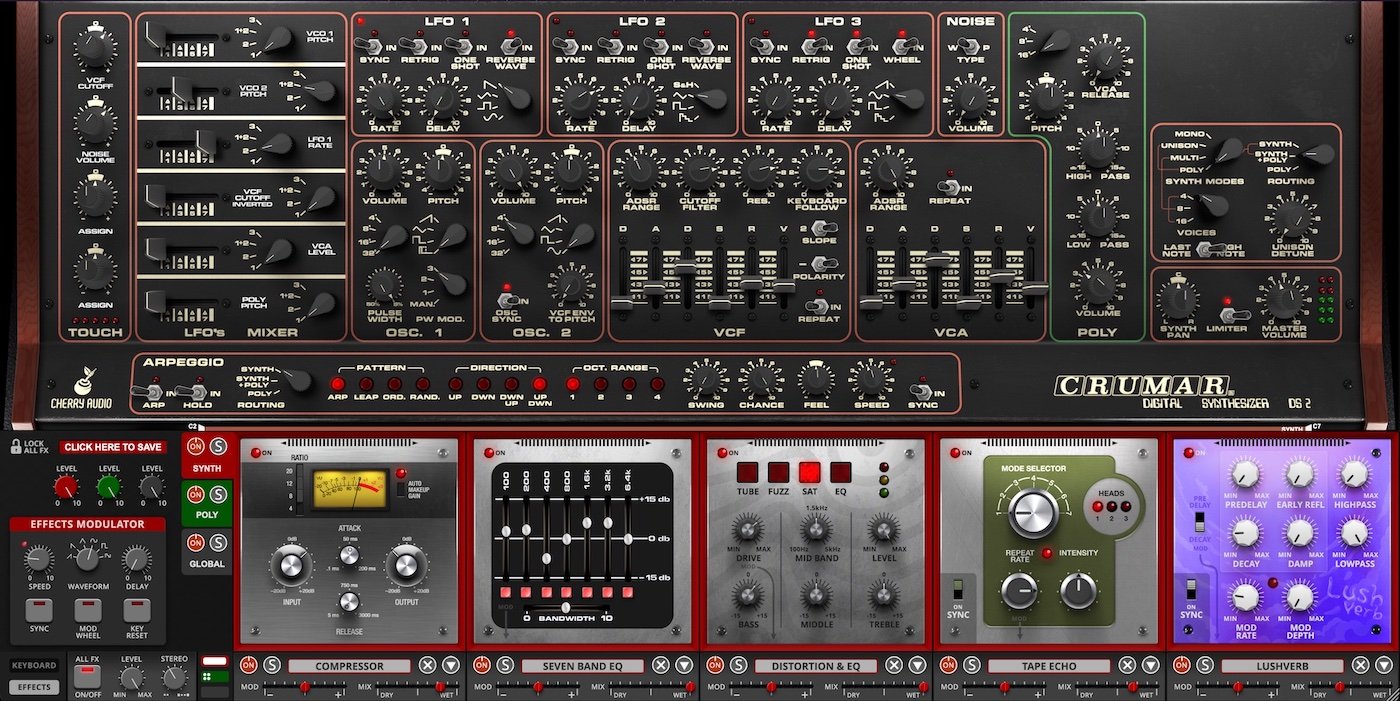
For effects, DS-2 provides three independent customizable effects chains: one for the Synth section, one for the Poly section, and a global layer. Each layer includes an individual effects modulator. Users can choose from 20 studio-quality effects that can be arranged, saved, and recalled within their effects chains. And producers can get started immediately with over 300 professionally designed presets in 14 categories for DS-2 that take full advantage of these features.
Crumar DS-2 includes over 300 sensational presets in 14 categories
Producers will find immediate inspiration in DS-2's extensive preset library, created by these veteran sound designers. And don't miss the Deep Space for DS-2 Preset Pack (sold separately), featuring an additional 100 presets that take further advantage of DS-2's advanced modulation routing, expressive performance features, layers and splits, the arpeggiator, and studio-quality integrated effects.
James is Director of Sound Design, responsible for preset programming and curation at Cherry Audio. He is a long-established sound designer and musician based in the San Francisco Bay Area who has worked with Dave Smith Instruments/Sequential, Pioneer DJ, Apple, and Hans Zimmer’s Remote Control.
Andrew first worked on soft/hardware development, preset design and sample libraries in 1983, going on to work create for Sony, Amek, DAR, Steinberg, eMagic, Lexicon, Klark Technic, Akai PMI, Roland, E-Mu, Creative Labs, Novation, Red Sound, dS-Tec, Yamaha and others. After 25 years in AV/VR, he has recently returned to product and sound design.
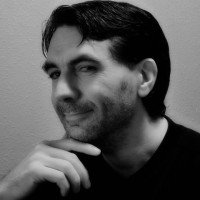
James is a freelance sound designer and musician based in the UK. He creates third-party preset packs as JD Soundsets. He draws inspiration and influence from Tangerine Dream, 80s film scores, and others and has been a long-time sound designer for Cherry Audio, Modal, and IK Multimedia.
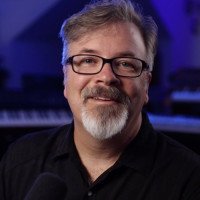
Mike Martin is an accomplished musician, sound designer, and music industry product manager. An alumnus of the Conservatory of Music at Capital University, he has worked in the music industry for more than 25 years and has held positions at Casio Music, Sonic Foundry, Kurzweil Music Systems, Yamaha, and TC Electronic.
"I've been running Cherry Audio's DS-2 for a couple of days. I've been playing around with it, getting to know it, writing some music with it. And I thought it was amazing and brilliant." Cherry Audio has again collaborated with Tim Shoebridge to create a comprehensive introductory video for Crumar DS-2. This in-depth exploration highlights its key features, including the distinguishing stair-stepped oscillators of the Synth section, the Poly section, the new extensive modulation capabilities, envelope and looping options, and more.
Based on the 1978 Crumar DS-2 that featured a monophonic DCO synth engine paired with a 44-note fully polyphonic (paraphonic) companion section, two LFOs, 24dB 4-pole VCF, two ADSR EGs, and a hardwired five part LFO mixer.
Improved Synth section: monophonic mode with last/high settings, Unison, and Multi voice options (including voice cycling, panning, and tuning). Polyphonic capabilities with 4, 8, or 16 voice options.
Improved Poly section: now fully polyphonic, accommodating up to 32 notes.
In addition to the layered mode, there is a keyboard split mode for the Synth and Poly tone generators, featuring adjustable ranges for both splits and layers.
Two oscillators based on the digitally-controlled oscillators of the original, with stair-stepped waveforms for sawtooth, triangle, square and pulse waveforms. OSC 2 in the Synth section now includes a matching stair-stepped sine waveform option.
Oscillator sync added.
An third LFO has been added to the original two, offering ramp, triangle, sine, square, sample & hold, and staircase waveform options.
LFOs have been enhanced with discrete delay knobs for each, replacing the previous global delay knob.
LFOs now include sync, retrigger, and one-shot capabilities, along with reverse wave options for LFOs 1 and 2.
The LFO Mixer, which was hardwired to OSC 1, OSC 2, VCF, VCA, and Pulse Width in the original, now features six assignable destinations with 33 options each.
An initial delay stage and velocity have been added to the envelopes (DADSR), and looped envelopes are now available. Polarity added to VCF EG.
VCA release control is included for the Poly section.
Touch control offers four slots with a simple click-to-assign functionality, allowing control by channel or polyphonic aftertouch with compatible controllers.
The VCF now provides both 12dB 2-pole and original 24dB 4-pole options, with polarity and key follow.
Assignable bend range for pitch and the addition of a dedicated mod wheel control.
Dynamic arpeggiator for either or both sections, with four pattern modes – Arp, Leap, Order, Random – with swing, chance, and feel to add degrees of randomness to arpeggiated patterns.
Three independent customizable effects chains, one each for the Synth and Poly sections, plus a global layer, with an individual effects modulator for each layer.
20 studio-quality effects that can be arranged, saved, and recalled within their effects chains, which are interchangeable with recent Cherry Audio synthesizers:
BBD Flanger, Compressor, Digital Delay, Digital Reverb, Distortion & EQ, Dual Delay, Dual Ensemble, Dual Phaser, Envelope Filter, Flanger & Chorus, Galactic Reverb, Lo-Fi, Lushverb, Ring Modulator, Seven Band EQ, Spring Reverb, and Tape Echo. New in Mercury-8 are DCO Chorus, Panner, and Pulser.
Mini UI effects control tray for on/off, solo, bipolar modulator amount slider, and dry/wet mix for each effect. Global FX on/off, level, and stereo expand
Standalone virtual instrument and plug-in versions included
User-adjustable oversampling control
Complete MIDI control and DAW automation for all controls, with easy-to-use MIDI learn and mapping (Preset and Global)
Cherry Audio's popular Focus zoom-in feature, as well as standard UI zoom and resize via drag
Complete documentation available directly online from the instrument or in downloadable PDF format
Also available, exclusively from Cherry Audio: the Deep Space for Crumar DS-2 Preset Pack is a set of 100 additional presets created by James Dyson. Deep Space explores tranquil, hypnotic soundscapes across 11 categories, utilizing DS-2's advanced modulation routing, expressive performance features, layers and splits, the arpeggiator, and studio-quality integrated effects.
Crumar DS-2 is available in AU, VST, VST3, AAX, and standalone formats, and a free 30-day demo is available.
macOS Requirements: 10.13 or above. macOS 13 Ventura supported. 64-bit required. Native Apple M1 or greater processor support, including Ultra. 3.4 GHz Quad-Core or M1 CPU with 8GB of RAM is recommended. Hard disk space: 150 MB
Windows Requirements: Windows 7 or above (including Windows 11), 64-bit required. Quad-core computer with 8GB of RAM is recommended. Hard disk space: 150 MB
An internet connection is required for product activation.