Made to Be Seen, Not Just Heard
-
 $59.00
 -
-
-
-
-
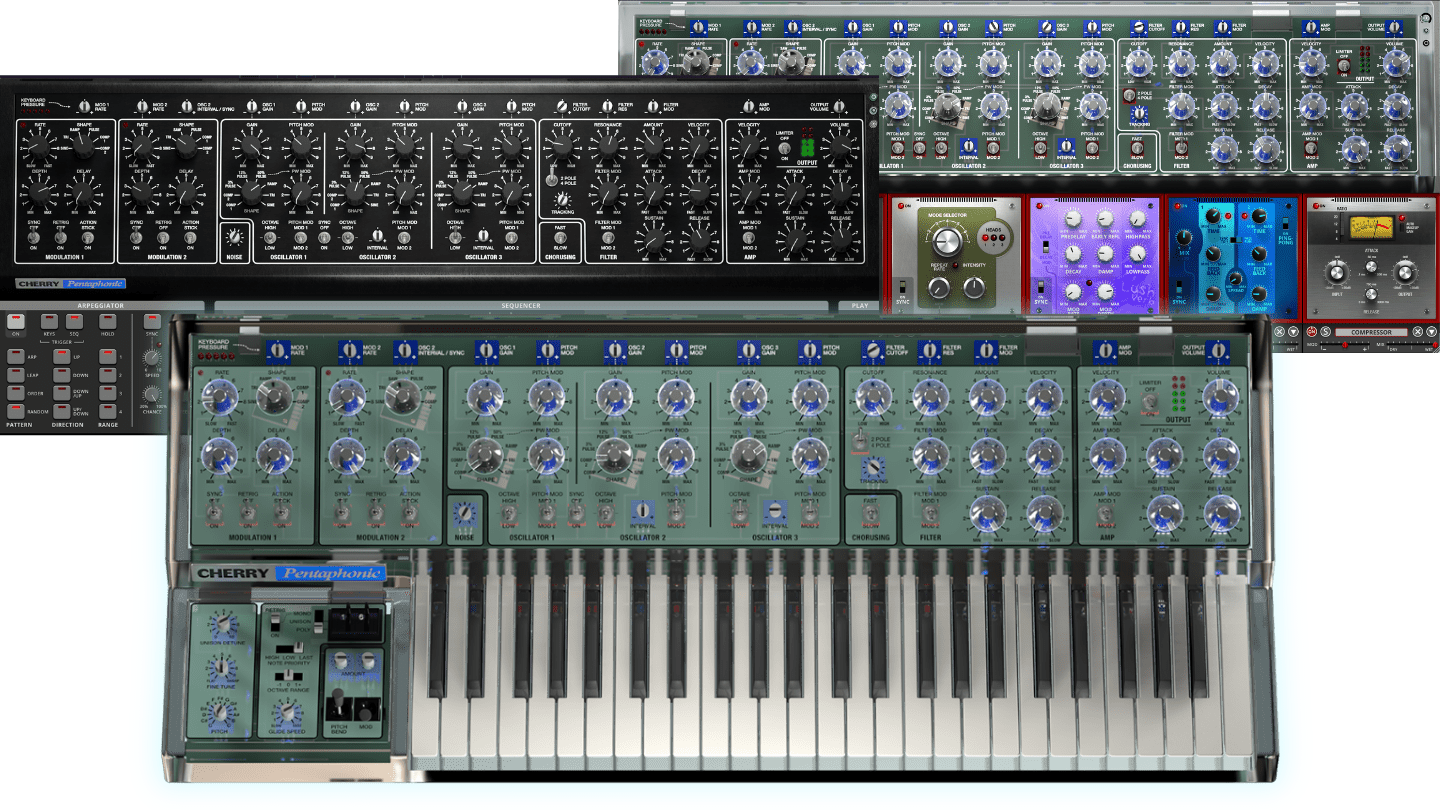
Cherry Audio's Pentaphonic synthesizer is a breathtaking virtual instrument that revives one of the rarest synthesizers ever made: the 1981 Pentaphonic by Gleeman Instruments. With fewer than 70 units ever produced, this synthesizer is legendary for its rich tone, distinctive design, and pioneering sequencing capabilities.
To honor both its sound and aesthetics, we have expertly replicated the thick, rich sound quality of its unique DCO (digitally controlled oscillator) and analog filter architecture, ensuring that the essence of the original is fully realized. Our visual makeover offers a choice of stunning designs inspired by the various looks it sported during its brief existence.
Beyond preserving every original option, we have dramatically expanded its capabilities in ways previously unimaginable. Cherry Audio's Pentaphonic synthesizer is not just an emulation of a lost classic; it is a celebration of the innovative spirit behind the original, proving that the most groundbreaking ideas don't always come from the biggest names.
In the early 1980s, while Silicon Valley focused on personal computers, brothers Bob and Al Gleeman were working in a Mountain View garage on a portable polyphonic synthesizer designed to hold its tuning under stage lights. Al, an electrical engineer, handled the design, while Bob, a musician, managed the business, creating a unique instrument that would stand out in a market filled with analog polysynths like the Prophet-5 and Memorymoog.
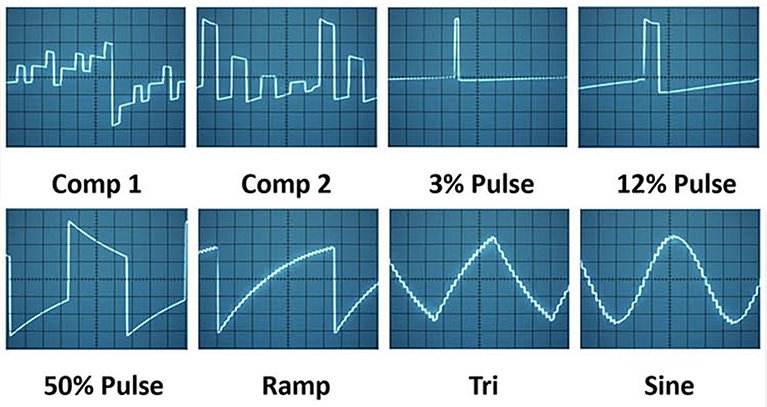
The Gleeman Pentaphonic featured five voices (hence "penta") with fifteen DCOs using a pair of Intel 80186 microprocessors to ensure precise tuning that analog models couldn't match. Each oscillator offered eight waveforms, including two harmonically rich "complex" waveforms. These were low-resolution, 32-sample waveforms played back at a variable clock/sample rate. A single digital low-frequency oscillator (LFO) handled triangle wave-based modulation for tremolo and vibrato. The synthesizer's rich hybrid sound came from its Curtis CEM 3320 4-pole (24 dB per octave) low-pass resonant voltage-controlled filter (VCF) and the CEM 3360 dual voltage-controlled amplifier (VCA).
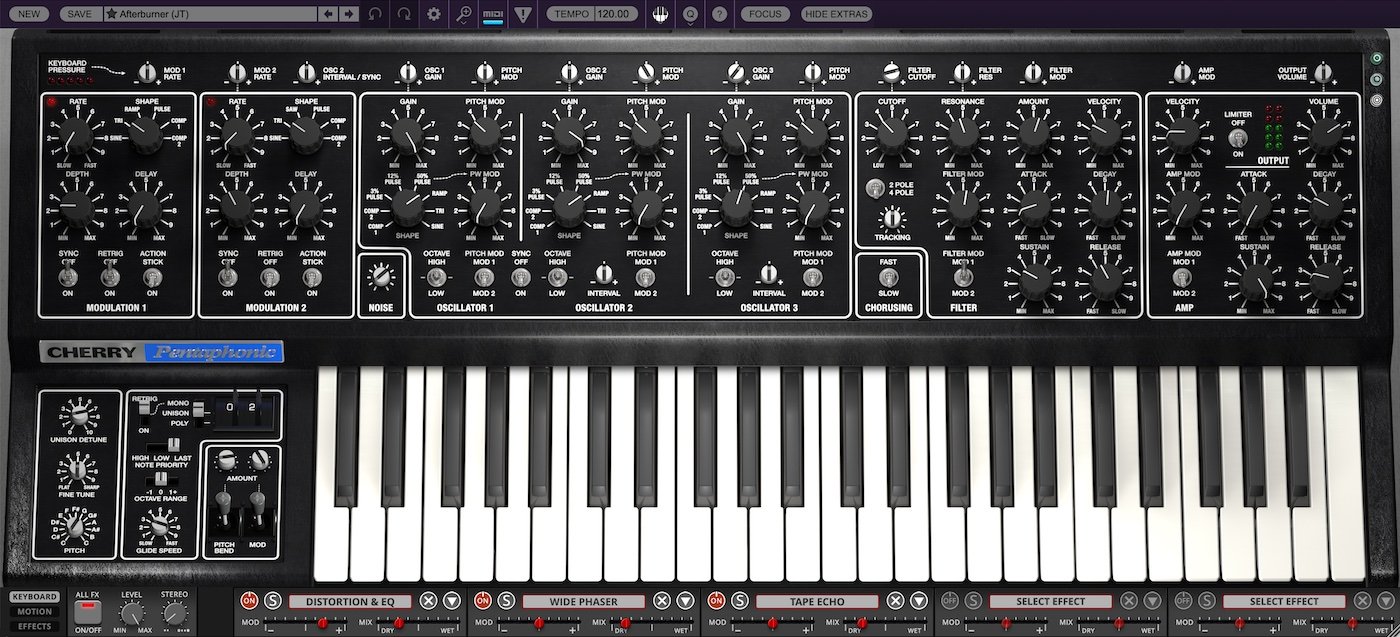
The first Pentaphonic arrived in 1981 in a plain black chassis with an integrated handle and built-in speaker, an "ultimate portable" weighing just 18 pounds. Underneath sat a hands-on control panel, a 37-note keybed, a 300-note real-time polyphonic sequencer, computer-tuned chorusing, and a joystick for pitch. At under $3,000, it went head-to-head with the Prophet-5 at $4,600, offering tuning stability its analog rivals couldn't achieve. They handmade around 30 black units with various, evolving features.
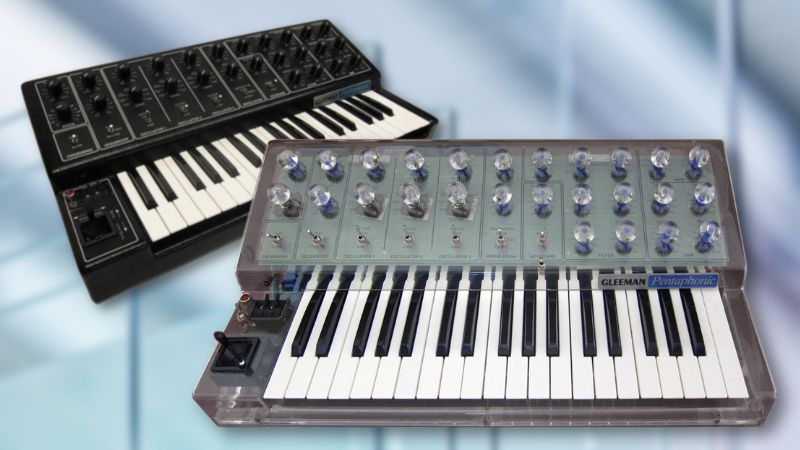
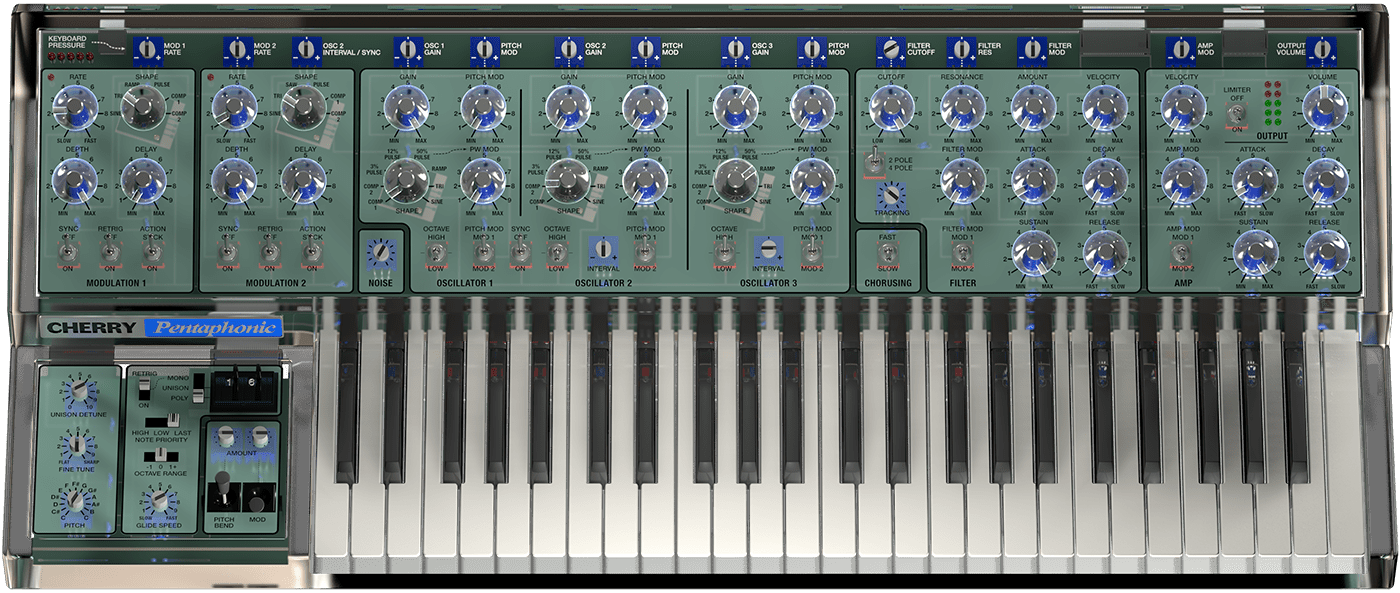
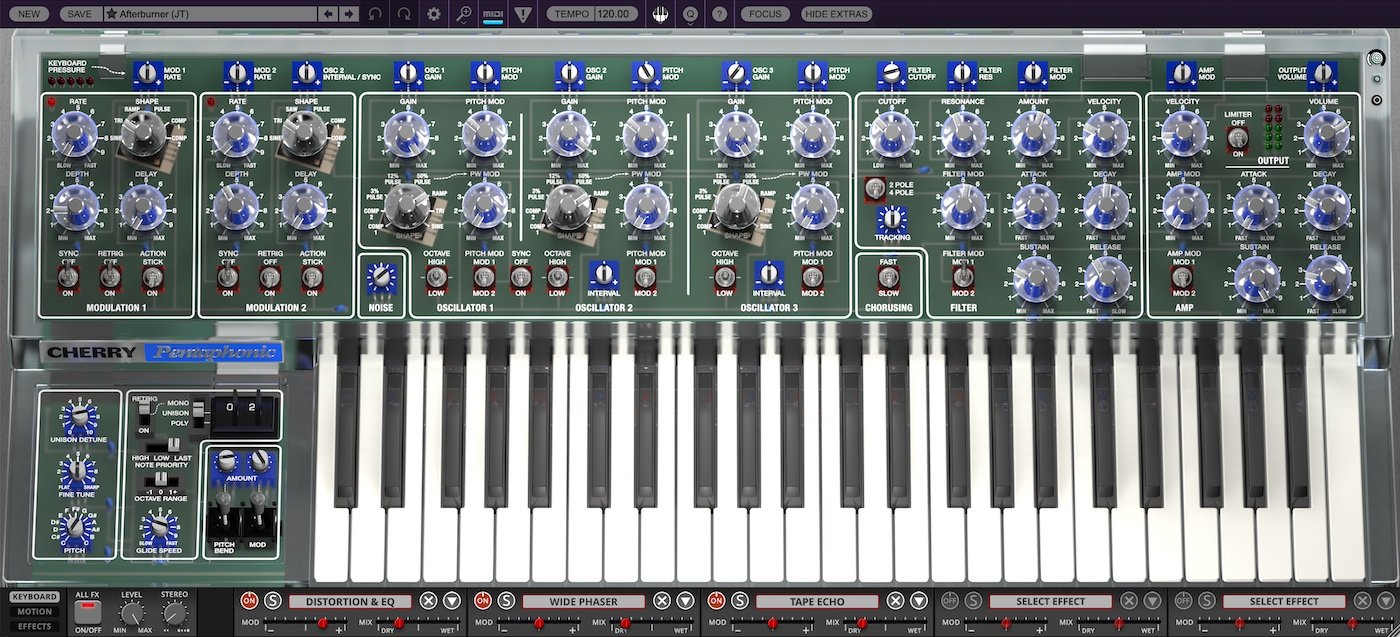
When a transparent version was suggested, Gleeman Instruments developed the Pentaphonic Clear. This model featured a clear acrylic housing, plexiglass knobs, and optional lighting that allowed audiences to see the circuitry illuminated against the green circuit boards. It came with a shoulder strap, a remote power supply to reduce weight, and a 20-foot cable, making it a fully equipped stage keytar. The Clear also brought the "Presetter" upgrade with 100 programmable patch memories, a two-axis joystick for simultaneous pitch and mod, an improved chorus, and a 600-note sequencer. Fully loaded, it was priced around $3,400. Fewer than 20 Clears were ever built.
The Gleeman Pentaphonic remains renowned for its rich, powerful, crystal-clear sound. Its exceptionally thick pads and string patches can make instruments like the OB-Xa sound thin by comparison, while delivering a sound reminiscent of a Memorymoog with remarkable clarity. The Complex 1 and Complex 2 oscillator waveforms produced bright, bell-like overtones, akin to Frequency Modulation (FM) synthesis, years before the DX7. However, the Pentaphonic lacked the grit and experimental features of its analog competitors, and its absence of an oscillator sync mode limited its sonic flexibility. Additionally, some performers found its 37-key range and lack of touch sensitivity restrictive. As the market shifted toward digital synthesizers in the mid-80s, the Gleemans wound down Pentaphonic production. In 1994, David Kean of the Audities Foundation bought the brothers' remaining parts inventory and assembled a small batch of new units — reportedly seven fresh Pentaphonics and seven Clears — keeping the flame alive for collectors.
Despite its scarcity, the Pentaphonic found its way into some notable hands. Jazz legend Oscar Peterson was so captivated by its sound that he bought a Clear immediately. Kevin Gilbert used one early in his career on the album NRG. The Moog Cookbook, Kansas, The Band, and R.E.M. put the Pentaphonic to work, and Depeche Mode's Martin Gore is counted among the owners. Surviving units surface rarely, and the Clear especially remains one of the most recognizable synths of its era.
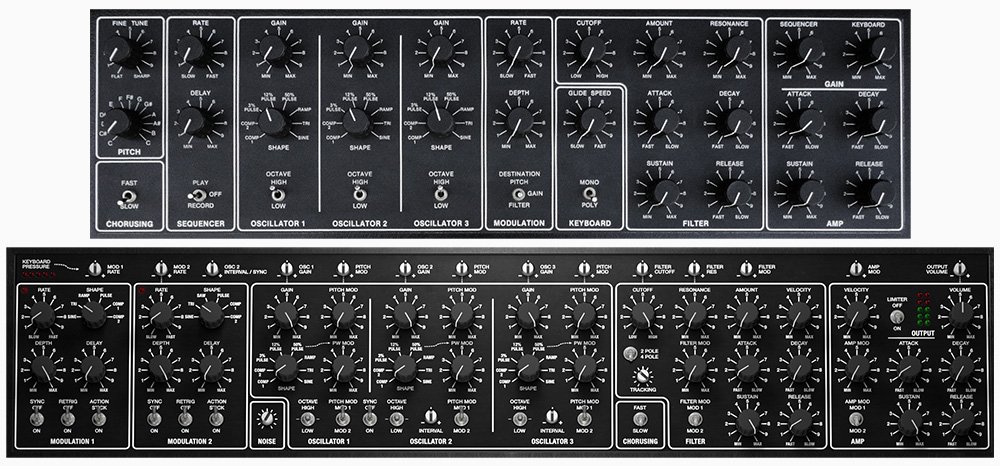
In the pioneering spirit of the small, ambitious outfit that built something genuinely unique for its time, Cherry Audio has embraced the challenge of actualizing the unrealized Gleeman prototype said to have been conceived in 1983. This successor was planned to feature eight voices, a 61-key keyboard, enhanced sequencer capabilities, and integrated MIDI support. With the introduction of Cherry Audio's Pentaphonic synthesizer, we've taken this concept beyond what was possible at the time while preserving the original design's unique qualities.
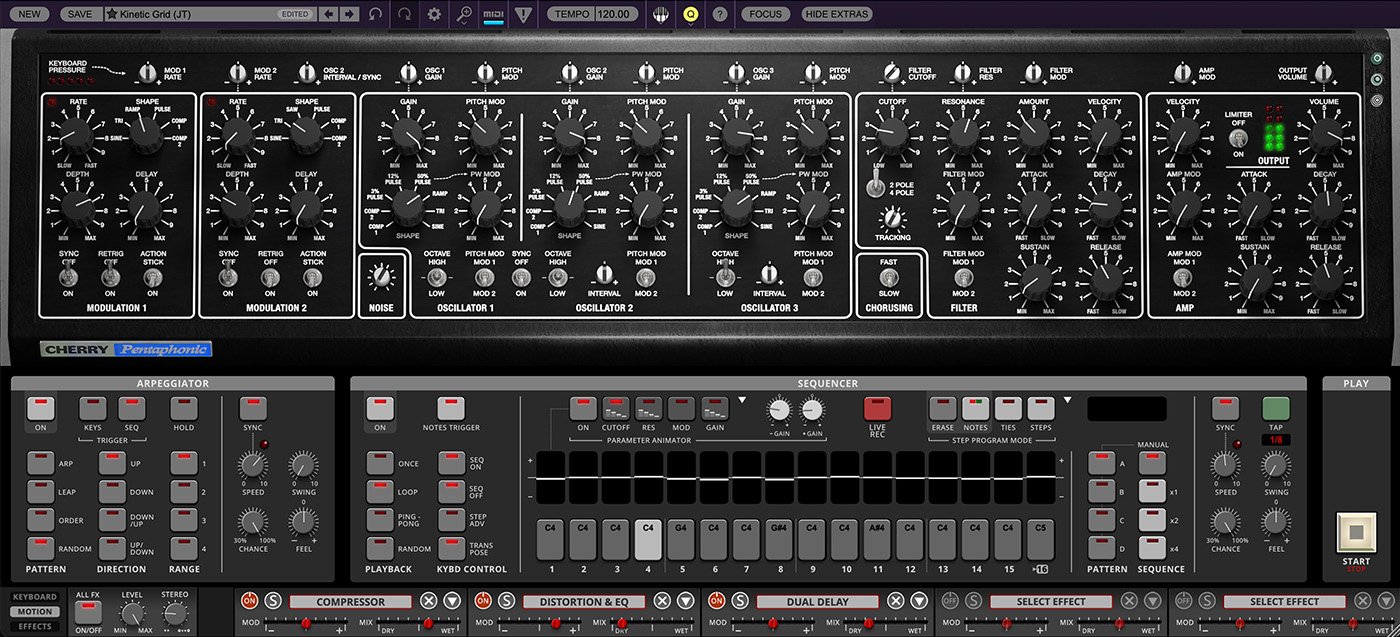
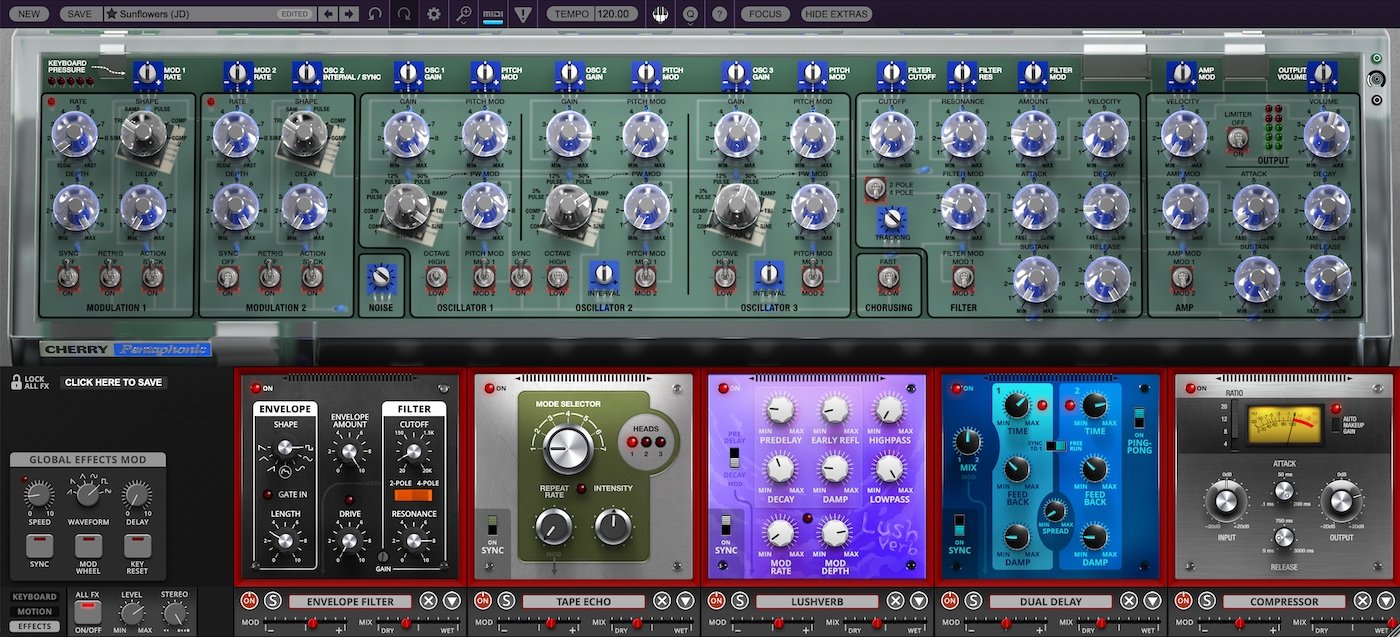
We have included three UI themes to capture the Pentaphonic's full chronology: the standard black look, plus stunning transparent and "Audities" clear themes with click-and-drag opacity. Polyphony (including unison with detune) has expanded to 2-16 voices, and we've also added retrigger and note priority to monophonic mode.
We added pulse width modulation to each oscillator, introduced a noise generator, and implemented oscillator sync. We also added an additional LFO, and each now includes all eight waveforms found in the DCOs: Complex 1, Complex 2, 3% Pulse, 12% Pulse, 50% Pulse, Ramp, Triangle, and Sine.
We've expanded the 4-pole (24 dB per octave) low-pass filter with a 2-pole (12 dB per octave) mode and keyboard tracking, and the amplifier section now includes a limiter. We've also introduced true performance expression to Pentaphonic, including velocity, channel and polyphonic aftertouch, and 14 parameters that can be modulated through keyboard pressure.
The advanced arpeggiator and 16x4 programmable polyphonic step sequencer are both syncable and transposable. They offer flexible humanization settings for patterns and sequences that surpass the original hardware. Additionally, it features a Parameter Animator that can be routed to cutoff, resonance, oscillator pitch mod, and oscillator gain. Alongside the original chorusing effect, Pentaphonic now includes a global effects chain with 22 studio-quality, modulatable effects to choose from.
Pentaphonic includes over 375 luminous presets in 14 categories
Producers will find immediate inspiration in Pentaphonic's extensive preset library, created by these veteran sound designers, as well as the original 50 factory patches. And don't miss the Translucent Preset Pack for Pentaphonic (sold separately), featuring additional 100 presets that further explore extended features such as complex modulation, aftertouch, the sequencer and arpeggiator, modulated effects, and more.
James is Director of Sound Design, responsible for preset programming and curation at Cherry Audio. He is a long-established sound designer and musician based in the San Francisco Bay Area who has worked with Dave Smith Instruments/Sequential, Pioneer DJ, Apple, and Hans Zimmer’s Remote Control.

Andrew first worked on soft/hardware development, preset design and sample libraries in 1983, going on to work create for Sony, Amek, DAR, Steinberg, eMagic, Lexicon, Klark Technic, Akai PMI, Roland, E-Mu, Creative Labs, Novation, Red Sound, dS-Tec, Yamaha and others. After 25 years in AV/VR, he has recently returned to product and sound design.

James is a freelance sound designer and musician based in the UK. He creates third-party preset packs as JD Soundsets. He draws inspiration and influence from Tangerine Dream, 80s film scores, and others and has been a long-time sound designer for Cherry Audio, Modal, and IK Multimedia.

Steve Peglar is an Austin, Texas-based keyboardist, synthesist, and vintage synthesizer aficionado. Having acquired his first synthesizer (an MG-1) in 1982, his electronic music involvement continues to this day, with his solo project – Binary Void – generating a special blend of retro-futurist, industrial, and atmospheric cinema soundtrack elements.
“It's really great. I'd say you nailed it! This is bringing back crazy memories of that cool little synth we loved. This sure has a character nothing else has. It starts with those oscillators - already they are something NOT usual. And then that filter does something as well - not sure what it compares to, but we're in a strange region that crosses a PPG with dirty Korg analogs and the weirder Sequential stuff like the Prophet VS.”
“It's really great. I'd say you nailed it! This is bringing back crazy memories of that cool little synth we loved. This sure has a character nothing else has. It starts with those oscillators - already they are something NOT usual. ”
Cherry Audio has teamed up with Mike Martin to produce an introductory video for Pentaphonic. This deep dive highlights its standout features, including its unique oscillators and waveforms, the three UI themes, expressive performance features, and all the ways Cherry Audio has expanded upon the original Gleeman Pentaphonic.
Based on the early-80s Pentaphonic synthesizers by Gleeman Instruments that originally featured a five-voice polyphonic digitally-controlled oscillator (DCO) synth engine.
Three UI Themes inspired by the history of the Pentaphonic case: black, clear, and "Audities" clear, with click-and-drag opacity.
Expanded voice options: monophonic mode with last/high settings and retrigger, Unison and Polyphonic voice options with 2 -16 voices.
Three oscillators per voice based on the DCOs of the original, with the original stair-stepped waveforms for Complex 1, Complex 2, 3% Pulse, 12% Pulse, 50% Pulse, Ramp, Triangle, and Sine.
Oscillator sync and pulse-width modulation added.
A second LFO has been added, now offering the same stair-stepped waveform options (beyond just triangle) as the oscillators.
LFOs can now be applied to oscillators, filter, and amp.
Original fast/slow chorusing included.
Velocity added to filter and amp.
Keyboard pressure with bipolar amount trimmers that provide discrete expressive control for pressure/aftertouch: modulation rate; oscillator 2 sync; oscillator gain and pitch; filter cutoff, resonance, and modulation; and amp modulation and volume.
The VCF now provides both 12dB 2-pole and the original 24dB 4-pole options, with polarity and key tracking.
Assignable range for pitch bend and a dedicated mod stick control.
Dynamic arpeggiator with four pattern modes – Arp, Leap, Order, Random – with swing, chance, and feel to add degrees of randomness to arpeggiated patterns.
Syncable and transposable 16x4 pattern polyphonic step sequencer with Start, Stop, Auto Start, and humanize options, with accurate DAW clock and step synchronization.
Parameter Animator, an additional per-layer sequencer that acts as a 16-step x 4-pattern parameter modulation source for cutoff, resonance, pitch modulation, and oscillator gain.
22 studio-quality effects for the Effects panel (up to five effects) with a chain that can be arranged, saved, and recalled: BBD Flanger, Compressor, DCO Chorus, Digital Delay, Digital Reverb, Distortion & EQ, Dual Delay, Dual Ensemble, Dual Phaser, Envelope Filter, Flanger & Chorus, Galactic Reverb, Lo-Fi, Lushverb, Panner, Pulser, Ring Modulator, Rotary Speaker, Seven Band EQ, Spring Reverb, Tape Echo, and Wide Phaser.
Effects control tray for on/off, solo, bipolar modulator amount slider, and dry/wet mix for each effect. Global FX on/off, level, and stereo expand
Over 375 presets in 14 categories, including the original 50 factory patches.
Standalone virtual instrument and plug-in versions included
User-adjustable oversampling control
Complete MIDI control and DAW automation for all controls, with easy-to-use MIDI learn and mapping (Preset and Global)
Cherry Audio's Focus zoom-in feature, as well as standard UI zoom and resize via drag
Complete documentation available directly online from the instrument or in downloadable PDF format
Sold separately and exclusively from Cherry Audio, the Translucent Preset Pack for Pentaphonic features 100 additional presets created by James Dyson. This pack explores tranquil and hypnotic soundscapes across eight categories, utilizing Pentaphonic's modulation, expressive performance features, arpeggiator, sequencer, and studio-quality effects.
Pentaphonic is available in AU, VST, VST3, AAX, and standalone formats, and a free 30-day demo is available.
macOS Requirements: 10.13 or above. macOS 13 Ventura supported. 64-bit required. Native Apple M1 or greater processor support, including Ultra. 3.4 GHz Quad-Core or M1 CPU with 8GB of RAM is recommended. Hard disk space: 196 MB
Windows Requirements: Windows 7 or above (including Windows 11), 64-bit required. Quad-core computer with 8GB of RAM is recommended. Hard disk space: 196 MB
An internet connection is required for product activation.